Most Asked Questions About Hair and Beard Transplant in 2026: Expert Answers
Get comprehensive answers to the most frequently asked questions about hair transplant and beard transplant procedures in 2026. Expert insights from Turkey Medical Hair specialists covering costs, recovery, results, and everything you need to know.
Hair transplant and beard transplant procedures have become increasingly popular in 2026, with thousands of patients seeking natural, permanent solutions for hair loss and facial hair restoration. As leading specialists at Turkey Medical Hair, we receive hundreds of questions daily from patients considering these life-changing procedures. This comprehensive guide addresses the most frequently asked questions about hair and beard transplants, providing expert insights based on our experience with over 15,000 successful procedures.
GENERAL QUESTIONS ABOUT HAIR TRANSPLANT
1. What is a hair transplant and how does it work?
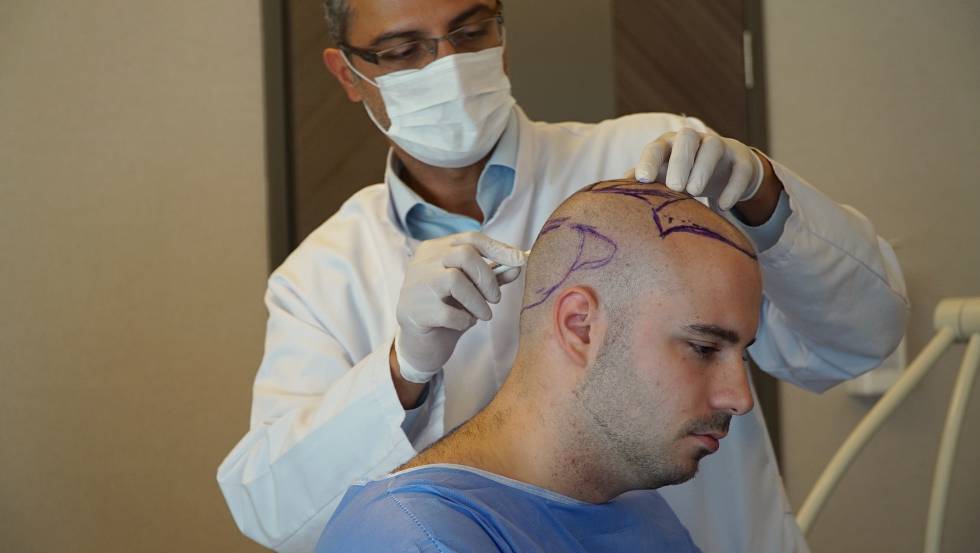
A hair transplant is a surgical procedure that moves hair follicles from a donor area (typically the back and sides of the head) to areas experiencing hair loss. The two main techniques we use at Turkey Medical Hair are FUE (Follicular Unit Extraction) and DHI (Direct Hair Implantation). FUE involves extracting individual hair follicles and then implanting them, while DHI uses a specialized pen-like device to extract and implant follicles simultaneously, allowing for more precise placement and higher density.
2. Am I a good candidate for hair transplant?
Most men and women experiencing pattern baldness, thinning hair, or hair loss due to various causes are good candidates for hair transplant. Ideal candidates have sufficient donor hair, realistic expectations, and are in good overall health. During your free consultation at Turkey Medical Hair, our specialists will assess your scalp condition, donor area quality, and medical history to determine if you're a suitable candidate. Age is also a factor—we typically recommend waiting until hair loss has stabilized, usually after age 25.
3. How much does a hair transplant cost in 2026?
Hair transplant costs in 2026 vary based on the number of grafts needed, the technique used (FUE or DHI), and the clinic's location and expertise. At Turkey Medical Hair in Antalya, our prices start from €1,500 and include accommodation, airport transfers, all medical services, and post-operative care. The final cost depends on the extent of hair loss and desired density. We offer transparent pricing with no hidden fees, and our packages are significantly more affordable than clinics in Europe or the United States while maintaining the same high quality standards.
4. How long does a hair transplant procedure take?
A typical hair transplant procedure takes 6-8 hours, depending on the number of grafts being transplanted. Smaller procedures (1,000-2,000 grafts) may take 4-6 hours, while larger procedures (3,000-5,000 grafts) can take 8-10 hours. The procedure is performed under local anesthesia, so you'll be awake but comfortable throughout. Our experienced team works efficiently to ensure optimal results while maintaining your comfort.
5. Is hair transplant painful?
Most patients report minimal discomfort during a hair transplant procedure. Local anesthesia is administered to numb the scalp, so you'll only feel slight pressure during the extraction and implantation phases. Some patients may experience mild discomfort when the anesthesia is first injected, but this subsides quickly. Post-operative pain is typically minimal and can be managed with prescribed pain medication. Most patients describe the experience as much more comfortable than they anticipated.
"Our patients consistently report that the hair transplant procedure is far less uncomfortable than expected, with most describing it as a manageable experience."
6. When will I see results after hair transplant?
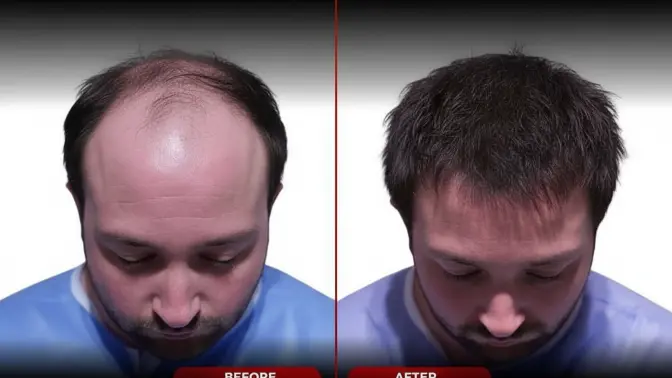
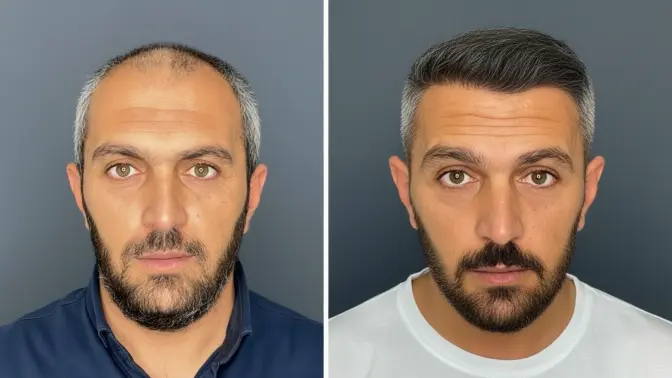
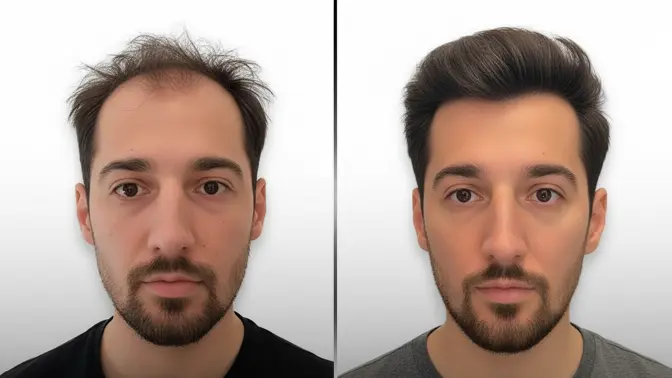
Hair transplant results follow a natural growth cycle. Initial results become visible after 3-4 months as new hair begins to grow. Significant growth is typically seen at 6 months, with continued improvement up to 12-18 months. The transplanted hair will go through a shedding phase (shock loss) 2-4 weeks after the procedure, which is completely normal. The new hair will then begin growing permanently. Full results are usually visible after 12-18 months, and the transplanted hair will continue to grow naturally for the rest of your life.
BEARD TRANSPLANT QUESTIONS
7. What is a beard transplant and how does it differ from hair transplant?
A beard transplant uses the same FUE or DHI techniques as hair transplant, but focuses specifically on facial hair restoration. Hair follicles are extracted from the donor area (usually the back of the head) and implanted into the beard area. The main difference is in the angle and direction of implantation to match natural beard growth patterns. Beard transplants require careful attention to detail to ensure the hair grows in the correct direction and matches your natural facial hair characteristics.
8. How much does a beard transplant cost in 2026?
Beard transplant costs in 2026 typically range from €2,000 to €4,000, depending on the coverage area and number of grafts needed. A full beard transplant may require 2,000-4,000 grafts, while patchy areas or mustache enhancement may require fewer grafts. At Turkey Medical Hair, our beard transplant packages include all medical services, accommodation, transfers, and follow-up care. We offer competitive pricing while maintaining the highest quality standards.
9. How long does it take to see beard transplant results?
Beard transplant results follow a similar timeline to hair transplant. You'll see initial growth after 3-4 months, with significant results visible at 6 months. Full beard density is typically achieved after 12-18 months. The transplanted beard hair will go through a shedding phase 2-4 weeks after the procedure, which is normal. After this, the permanent beard hair will begin growing, and you can start trimming and styling it as desired.
10. Can I shave after a beard transplant?
Yes, you can shave after a beard transplant, but you need to wait until the transplanted area has fully healed, typically 2-3 weeks after the procedure. During the first week, you should avoid shaving to allow the grafts to settle. After the initial healing period, you can shave normally. The transplanted beard hair will grow just like natural facial hair and can be trimmed, shaved, and styled as desired. Many patients find that they can achieve the beard style they've always wanted after the transplant.
RECOVERY AND AFTERCARE QUESTIONS
11. How long is the recovery period after hair or beard transplant?
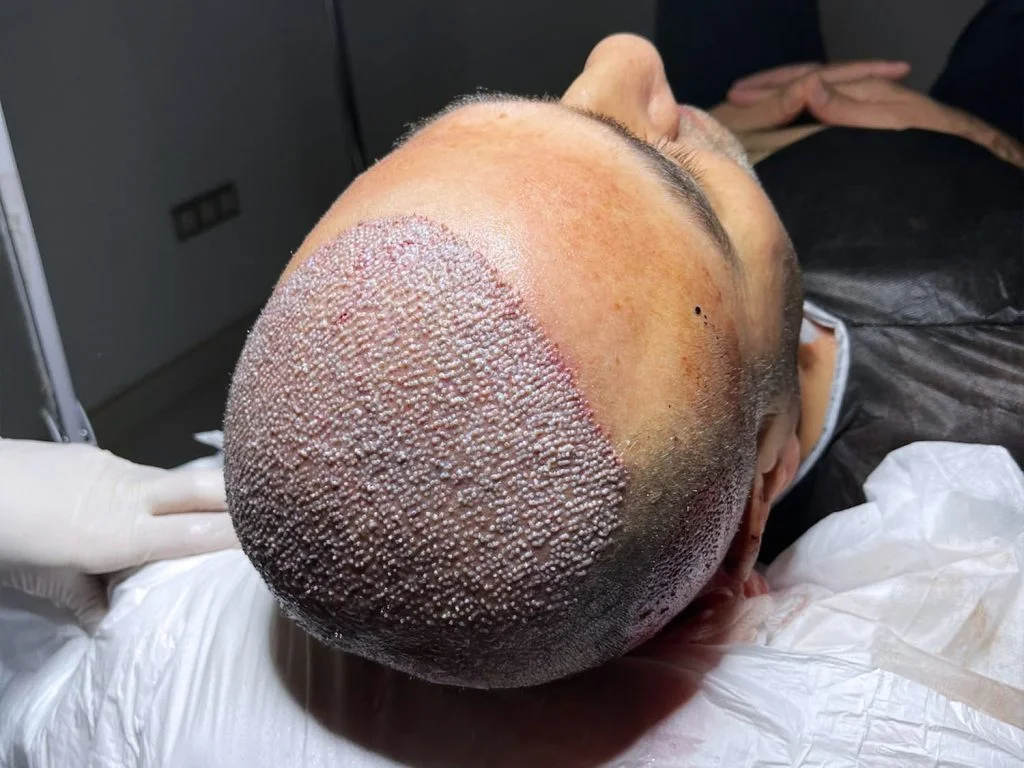
The initial recovery period is relatively short. Most patients can return to work and normal activities within 3-5 days after the procedure. The transplanted area will have small scabs that typically fall off within 7-10 days. You should avoid strenuous activities, swimming, and direct sun exposure for the first 2 weeks. Full healing occurs within 2-3 weeks, though the hair growth cycle continues for 12-18 months. Our team provides detailed aftercare instructions and is available 24/7 to answer any questions during your recovery.
12. Will there be scarring after the procedure?
Modern FUE and DHI techniques minimize scarring significantly. With FUE, tiny circular scars (less than 1mm) are scattered throughout the donor area and are virtually invisible once healed, especially when covered by surrounding hair. DHI creates even smaller, less noticeable scars. The recipient area typically shows no visible scarring once healed. Our experienced surgeons use the latest techniques to ensure minimal scarring and natural-looking results.
13. What should I avoid after hair or beard transplant?
For the first 2 weeks after your procedure, you should avoid: strenuous exercise and activities that cause sweating, direct sunlight exposure, swimming (pools, sea, or hot tubs), smoking and alcohol consumption, touching or scratching the transplanted area, wearing tight hats or caps, and using hair styling products. After 2 weeks, you can gradually resume normal activities, but always follow your surgeon's specific recommendations for your individual case.
TECHNIQUE AND QUALITY QUESTIONS
14. What is the difference between FUE and DHI hair transplant?
FUE (Follicular Unit Extraction) involves extracting individual hair follicles from the donor area using a micro-punch tool, then creating recipient sites and implanting the follicles. DHI (Direct Hair Implantation) uses a specialized Choi pen that extracts and implants follicles in one step, allowing for more precise angle control and higher density. DHI is particularly beneficial for achieving natural-looking hairlines and maximum density. Both techniques are effective, and our specialists will recommend the best option based on your individual needs and goals.
15. How many grafts do I need for a hair transplant?
The number of grafts needed depends on several factors: the extent of hair loss, desired density, hair characteristics (thickness, color, texture), and the size of the recipient area. Generally, a small area may require 1,000-2,000 grafts, moderate hair loss may need 2,000-3,500 grafts, and extensive hair loss may require 3,500-5,000+ grafts. During your consultation at Turkey Medical Hair, our specialists will assess your specific situation and provide a personalized graft count recommendation.
16. Is hair transplant permanent?
Yes, hair transplant is considered a permanent solution. The transplanted hair follicles are taken from the donor area (typically the back and sides of the head), which is genetically resistant to hair loss. Once transplanted, these follicles will continue to grow hair for the rest of your life, following your natural hair growth cycle. However, it's important to note that existing non-transplanted hair may continue to thin over time, which is why some patients opt for additional sessions or maintenance treatments.
"Hair transplant provides permanent, natural-looking results that last a lifetime, making it one of the most effective long-term solutions for hair loss."
WHY CHOOSE TURKEY FOR HAIR TRANSPLANT?
Turkey has become the world's leading destination for hair transplant procedures, and for good reasons. Turkish clinics offer world-class medical facilities, highly experienced surgeons, and significantly more affordable prices compared to Europe and the United States. At Turkey Medical Hair in Antalya, we combine medical excellence with exceptional patient care, offering all-inclusive packages that include accommodation, transfers, and comprehensive aftercare support.
Our clinic has performed over 15,000 successful procedures with a 98% patient satisfaction rate. We use the latest FUE and DHI techniques, maintain international medical standards, and provide personalized care throughout your entire journey. Many patients choose Turkey not only for the cost savings but also for the expertise and quality of care they receive.
Bu Yazıyı Paylaş
Frequently Asked Questions
How much does a hair transplant cost in Turkey in 2026?
Hair transplant costs in Turkey in 2026 start from €1,500 at Turkey Medical Hair, including accommodation, transfers, and all medical services. The final cost depends on the number of grafts needed, typically ranging from €1,500 to €4,000 for most procedures.
Is hair transplant painful?
Hair transplant is performed under local anesthesia, so most patients experience minimal discomfort. You may feel slight pressure during the procedure, but pain is typically minimal and manageable with prescribed medication if needed.
When will I see results after hair transplant?
Initial results are visible after 3-4 months, with significant growth at 6 months. Full results are typically seen after 12-18 months, and the transplanted hair will continue to grow naturally for the rest of your life.
How much does a beard transplant cost?
Beard transplant costs in 2026 range from €2,000 to €4,000, depending on the coverage area and number of grafts needed. This includes all medical services, accommodation, and transfers at Turkey Medical Hair.
Can I shave after a beard transplant?
Yes, you can shave after a beard transplant once the area has fully healed (typically 2-3 weeks). The transplanted beard hair will grow just like natural facial hair and can be trimmed, shaved, and styled as desired.
What is the difference between FUE and DHI?
FUE involves extracting follicles and then implanting them, while DHI uses a specialized pen to extract and implant simultaneously, allowing for more precise placement and higher density. Both techniques are effective, and our specialists will recommend the best option for your needs.
Is hair transplant permanent?
Yes, hair transplant is permanent. The transplanted follicles are taken from areas resistant to hair loss and will continue to grow hair for the rest of your life, following your natural hair growth cycle.
How long is the recovery period?
Most patients can return to work within 3-5 days. Initial healing occurs within 2-3 weeks, though the full hair growth cycle continues for 12-18 months. You should avoid strenuous activities for the first 2 weeks.